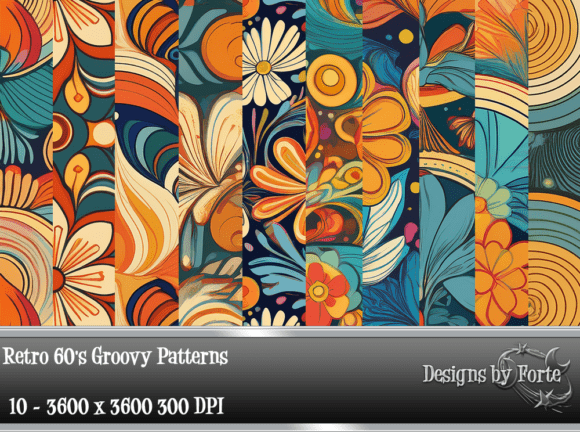
Revitalizing Your Creative Projects with Retro 60s Groovy Patterns
There is a specific kind of energy that only the mid-20th century could conjure. It is an era defined by optimism, rebellion, and a visual language that refuses to stay in the background. The Retro 60s Groovy Patterns collection captures this electric spirit perfectly, offering designers, crafters, and artists a direct line to the psychedelic and mod aesthetics that defined a generation. This isn't just about nostalgia; it is about injecting a proven sense of style into modern workflows where bold visuals are required to cut through the noise.
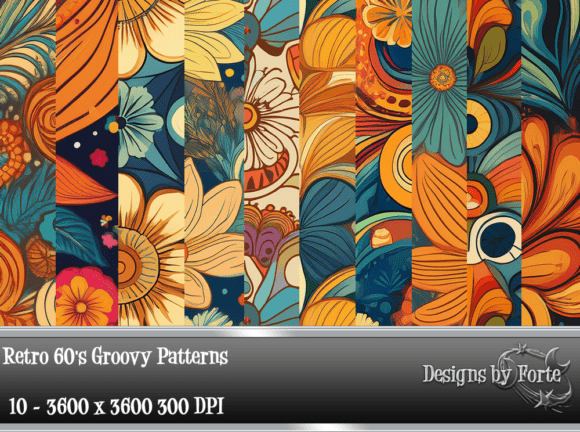
When you dive into this revolutionary package, you aren't getting generic, low-resolution clip art. You are accessing a curated set of 10 mesmerizing designs, each meticulously crafted at a massive resolution of 3600 x 3600 pixels. These patterns are rendered at 300 DPI, ensuring that whether you are printing a large-scale banner or creating a tiny digital sticker, the detail remains exquisite and sharp. The use of AI-generated design in this context allows for a level of complexity and color blending that feels authentic to the era while maintaining the precision required for professional output.
The Power of High-Resolution Vintage Aesthetics
In the world of digital design, resolution is everything. Many vintage-style assets suffer from pixelation when scaled up, ruining the illusion of authenticity. The Retro 60s Groovy Patterns solve this problem immediately. With a canvas size of 3600 x 3600 pixels, these files are robust enough to handle everything from web graphics to full-page print layouts without losing their crisp edges. The 300 DPI standard is the industry benchmark for high-quality printing, meaning your projects will look as good on paper as they do on a screen.
This technical superiority makes the collection incredibly versatile. You can take a pattern designed for a small logo and scale it up to cover an entire wall mural or a billboard without any degradation in quality. The vibrant colors, which are the hallmark of the 60s, are preserved with fidelity, ensuring that the "groovy" factor doesn't get lost in compression artifacts. Whether you are working in Adobe Photoshop, Illustrator, or a simple graphic editor, having access to such high-fidelity source material elevates the final product significantly.
Bridging Eras: From Scrapbooking to Brand Identity
One of the most exciting aspects of the Retro 60s Groovy Patterns is how seamlessly they bridge the gap between personal hobbies and professional branding. For the hobbyist, these patterns are a goldmine. Imagine planning a scrapbook page or a journal entry that needs to tell a story of family history or travel. Adding a layer of these groovy textures provides depth and character that plain paper simply cannot achieve. They act as a visual anchor, turning a simple layout into a piece of art.
However, the utility extends far beyond the home desk. In the corporate and marketing world, standing out is the primary objective. Brands looking to evoke feelings of fun, creativity, or nostalgia often struggle to find assets that don't look cheap or dated. This collection offers a solution. By incorporating these patterns into advertising banners, logos, or brand presentations, companies can create a distinct visual identity that feels both fresh and familiar. A retro twist can make a modern service feel more approachable and human.
- Scrapbooking and Journaling: Use the patterns as backgrounds for photos or text boxes to add texture and historical context.
- Card Design: Create greeting cards for birthdays or anniversaries that pop off the shelf with bold, swirling colors.
- Advertising Banners: Draw attention to sales events or new product launches with dynamic, eye-catching backdrops.
- Blog Revamps: Transform stale blog pages into vibrant spaces that encourage readers to linger longer.
Industrial Applications: Textiles and Packaging
Moving beyond digital screens and paper crafts, the Retro 60s Groovy Patterns have profound implications for physical manufacturing industries. Textile design is perhaps the most obvious application. Fashion has always been cyclical, and the resurgence of mod styles and psychedelic prints is evident on runways and in streetwear. Designers can utilize these high-resolution patterns to reinvigorate fabrics, creating clothing lines that capture the essence of the swinging sixties with modern manufacturing techniques.
Packaging is another sector where these patterns shine. In a marketplace saturated with minimalist white boxes and sleek black containers, a wrapping paper featuring bold, groovy swirls stands out immediately. Consumers are drawn to unique experiences, and the unboxing moment is no exception. Using these designs for gift wrap or product packaging adds a layer of perceived value and thoughtfulness. It tells the customer that the brand cares about the details, even down to the paper that holds the product.
Furthermore, the versatility of the set allows for creative applications in stationery. Crafting planner dividers that separate sections of a schedule becomes an enjoyable activity rather than a chore when you have stunning visuals to work with. Similarly, producing standout stickers for laptops, water bottles, or notebooks is effortless with these ready-to-use assets. Even magazine layouts benefit from a refreshing backdrop that breaks the monotony of traditional grids and columns.
Why Choose AI-Generated Retro Designs?
You might wonder why a collection like this relies on AI generation. The answer lies in the unique capabilities of artificial intelligence to interpret and recreate complex stylistic nuances. Traditional vector illustrations of the 60s often rely on hand-drawn lines that can feel rigid or limited in variation. AI-generated patterns, however, can produce organic, flowing designs that mimic the imperfections and fluidity of hand-painted murals from the era.
This technology allows for a faster iteration process. Designers can explore dozens of variations of a "groovy" theme in minutes, selecting the one that best fits their specific project needs. The result is a collection that feels handmade and authentic but benefits from the computational power to ensure perfect repetition and alignment. When you use the Retro 60s Groovy Patterns, you are leveraging the best of both worlds: the soulful aesthetic of the past and the precision of modern technology.
Practical Considerations for Implementation
Before diving into a project with these patterns, it is helpful to consider how they interact with other design elements. The 60s were known for high contrast and bold typography. To make these patterns work effectively, avoid cluttering them with too many competing elements. Let the patterns breathe. Use them as a background for clean, sans-serif fonts that echo the modernist side of the 60s, or pair them with script fonts for a more playful, hippie vibe.
Color theory also plays a crucial role. While the patterns come pre-colored, understanding the psychology of the hues used—often warm oranges, deep purples, and electric blues—can help you choose the right pattern for the right mood. If you need something energetic for a concert poster, go for the brighter, higher-contrast options. For a more sophisticated brand presentation, perhaps a subtler, lower-saturation variant might be more appropriate.
Additionally, consider the file format compatibility. Since these are high-resolution images, they are generally compatible with almost all major design software. However, if you need to edit the individual vector paths, you may need to use image tracing tools within your software. Most users, however, will find that using them as raster overlays or background fills is the most efficient workflow.
Making a Lasting Impression
Ultimately, the goal of any design project is to leave an impression. The Retro 60s Groovy Patterns provide a shortcut to achieving that goal by tapping into a universally recognized and beloved aesthetic. Whether you are a freelancer looking to spice up a client's website, a teacher making engaging classroom materials, or a business owner launching a new product line, these patterns offer a reliable way to inject personality and style.
The collection is not just a set of images; it is a toolkit for storytelling. It invites you to step away from the sterile, corporate look and embrace a time when design was daring, colorful, and full of life. By integrating these 10 high-quality, AI-generated patterns into your workflow, you are ensuring that your work stands out, resonates with audiences, and carries a touch of timeless cool. So, open up your design software, select a pattern, and let the groovy vibes flow into your next creation.